Introduction
There is a moment that happens in almost every furniture buyer’s home, usually somewhere between 18 months and three years after purchase. A cushion has flattened noticeably. A drawer does not quite close the way it used to. A fabric that looked rich in the showroom has started to pill. The finish on a dining chair leg is chipping at the contact point with the floor. None of these feel-like disasters individually, but together they carry a quiet, persistent message: this furniture was not built to last.
The problem is that most furniture is designed to look exceptional at the point of sale and acceptable for as long as the warranty period covers. After that, the buyer is on their own. This is true across a wide range of price points, from budget catalogue chains all the way through to some brands that market themselves as luxury furniture stores in Chennai without fully earning the designation.
This guide is about the real difference between furniture that genuinely lasts and furniture that merely looks good at the time of purchase. Understanding this difference before you buy is the single most valuable thing you can do for your home and your long-term budget.
Table of Contents
1. Why the Furniture Industry Makes This Confusing
2. The Visual Deception: What Looks Premium But Is Not
3. The Durability Framework: Frame, Foam, Fabric
4. Material Comparison: What Lasts vs. What Does Not
5. What Separates Genuine Luxury Furniture Stores in Chennai
6. How to Assess Quality Before You Buy
7. The Fezmo Build Standard
8. Conclusion
9. Author Bio
1. Why the Furniture Industry Makes This Confusing
The furniture industry has a genuine incentive to blur the line between appearance and quality. A piece that looks premium but is built to a lower standard can be sold at a higher margin than its actual cost of production justifies. Photography, lighting, and showroom staging do most of the work. The buyer relies almost entirely on visual impression because the internal construction is invisible.
This dynamic affects the entire market, from budget flat-pack stores to mid-range showrooms. Even within the category of top 10 furniture shops in Chennai as commonly listed in online guides, the variation in actual build quality is enormous. Appearing on a curated list does not mean the furniture will hold up for a decade. It means the brand has sufficient visibility to be included.
Understanding this makes the buying decision more complex but also more manageable. Once you know what to look for beyond appearance, you stop relying on the showroom’s visual presentation and start evaluating the product itself.
2. The Visual Deception: What Looks Premium but Is Not
Surface Finishes That Hide Poor Substrate
A high-gloss finish on a cabinet door can look genuinely luxurious. But if the substrate beneath that finish is low-quality particleboard rather than solid wood or quality MDF, the piece will swell, warp, or delaminate when exposed to moisture. The finish is not the structure. The finish is the wrapping.
Plush Upholstery Over Low-Density Foam
Thick, soft upholstery fabric gives an immediate impression of luxury. But the foam beneath determines whether that impression lasts six months or six years. Low-density foam (below 32 kg/m3) compresses quickly under regular use. High-density foam (40 kg/m3 and above) maintains its shape and support for years. You cannot see foam density. You must ask.
Aesthetic Hardware Over Structural Hardware
Gold-toned or brushed metal handles, legs, and fittings photograph beautifully and look expensive in a showroom. But if the metal is thin and the surface coating is decorative rather than functional, it will tarnish, oxidise, or chip within the first year of use, particularly in Chennai’s coastal humidity.
3. The Durability Framework: Frame, Foam, Fabric
Every upholstered furniture piece can be evaluated through three primary lenses. When all three are high quality, the furniture lasts. When any one of them is compromised, the whole piece suffers.
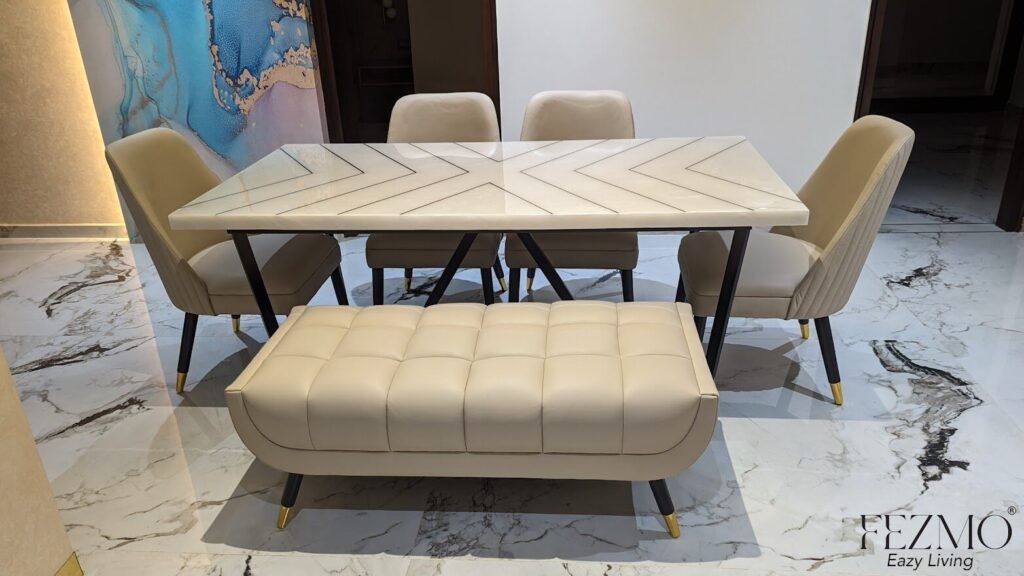
The frame determines structural integrity. Solid hardwood frames are the gold standard. Engineered wood frames can be acceptable if the quality is high and the joinery is proper. Cheap particleboard frames will fail under regular use, often invisibly until a joint give’s way.
The foam determines long-term comfort and shape retention. Foam grade should be disclosed by any furniture shop worth buying from. Ask specifically. If the answer is vague, treat that as a warning.
The fabric determines appearance over time. Abrasion resistance, colourfastness, and breathability all matter. For Chennai’s climate, breathability is a daily comfort issue, not just a technical specification.
4. Material Comparison: What Lasts vs. What Does Not
ComponentLower QualityHigher QualityImpact Over TimeFrameParticleboard or hollow metalSolid hardwood or kiln-dried timberHigher quality maintains structure for 10+ yearsFoamLow-density (under 32 kg/m3)High-density (40 kg/m3 and above)High density resists sagging and moisture retentionFabricThin synthetic weavePerformance fabric or Italian leatherBetter fabric resists pilling, fading, and heat retentionLegsChrome or bare metalPowder-coated or solid woodBetter finish resists oxidation in coastal humidityJointsStaples or basic screwsDowel and glue or mortise and tenonStrong joints prevent wobble and structural failureCushion WrapPolyester onlyFoam core with fibre wrapWrapped foam retains shape and softness longer
5. What Separates Genuine Luxury Furniture Stores in Chennai
The word luxury is applied liberally in furniture retail. But genuine luxury furniture stores in Chennai share specific characteristics that separate them from brands that use the label without earning it.
First, they disclose what goes into their products. A shop that cannot tell you the foam density, wood species, or fabric abrasion rating is not operating at a luxury standard. Transparency about materials is not optional at the premium end of the market. It is the baseline expectation.
Second, they customise. Real luxury is not buying from someone else’s catalogue and calling it premium. It is having furniture made to your specific requirements, in your dimensions, with your material choices. The customisation capability is what separates manufacturers from retailers.
Third, they back their products. A genuine luxury furniture store offers meaningful warranty terms and manages after-sales support in-house. If something goes wrong, they own the resolution rather than pointing you to a manufacturer’s helpline.
See what this standard looks like in practice at the Fezmo Anna Nagar showroom, where every piece on display can be fully examined, discussed, and customised.
6. How to Assess Quality Before You Buy
- Lift the piece. Well-made furniture with solid wood frames is noticeably heavier than hollow-frame alternatives.
- Press the seat cushion firmly and release. High-density foam springs back immediately. Low-density foam takes a moment to recover.
- Examine corners and joints. Solid construction shows clean, tight joins. Poor construction shows gaps, staples, or wobble.
- Ask for the foam density specification in kg/m3. A shop that cannot answer this does not know what is inside their own product.
- Run your hand firmly across the fabric several times. Quality fabric shows no immediate pilling or distortion. Poor fabric starts breaking down on contact.
- Check the underside. Quality furniture looks considered even where no one will see it. Cheap furniture reveals itself at the back and bottom.
7. The Fezmo Build Standard
Fezmo’s manufacturing process is built around the conviction that furniture should outlast the trend that inspired it. Every piece starts with a hardwood or kiln-dried timber frame. Foam specifications are selected for both comfort and climate resilience, tested specifically for Chennai’s humidity conditions. Fabrics are sourced for performance as well as appearance, with options including Italian leather and a curated range of high-durability upholstery materials.
The construction process involves multiple quality checks before any piece leaves the workshop, including durability testing, upholstery accuracy verification, stitch-line symmetry checks, and structural stability assessment. This is not the standard in most furniture stores in Chennai. It is the Fezmo standard.
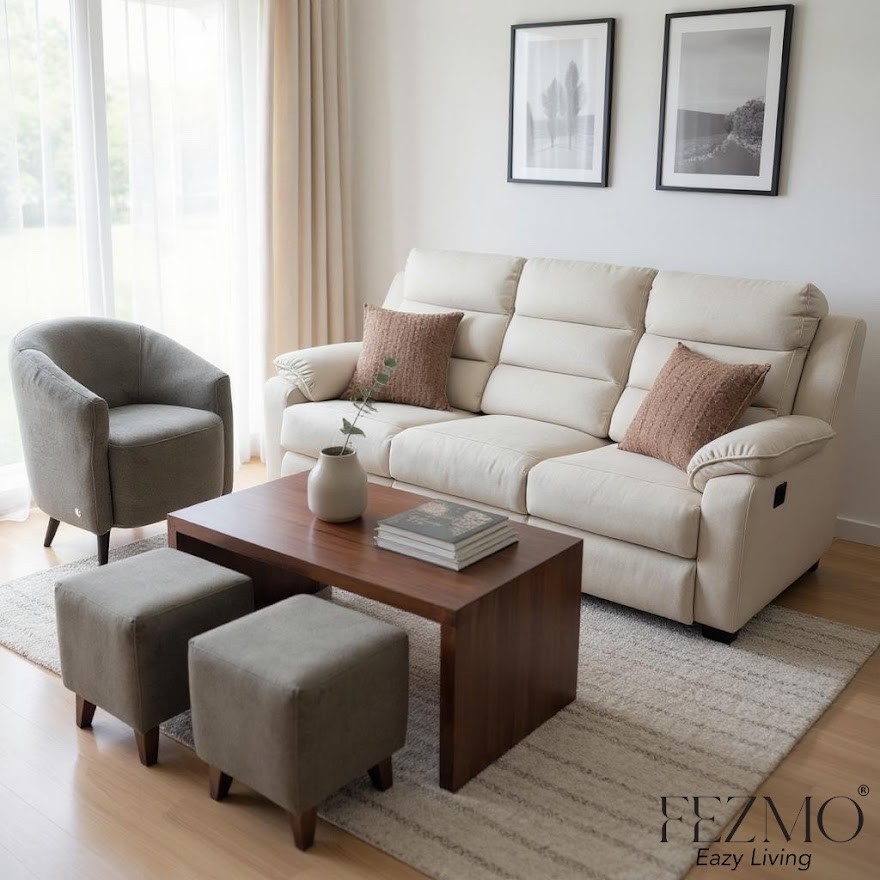
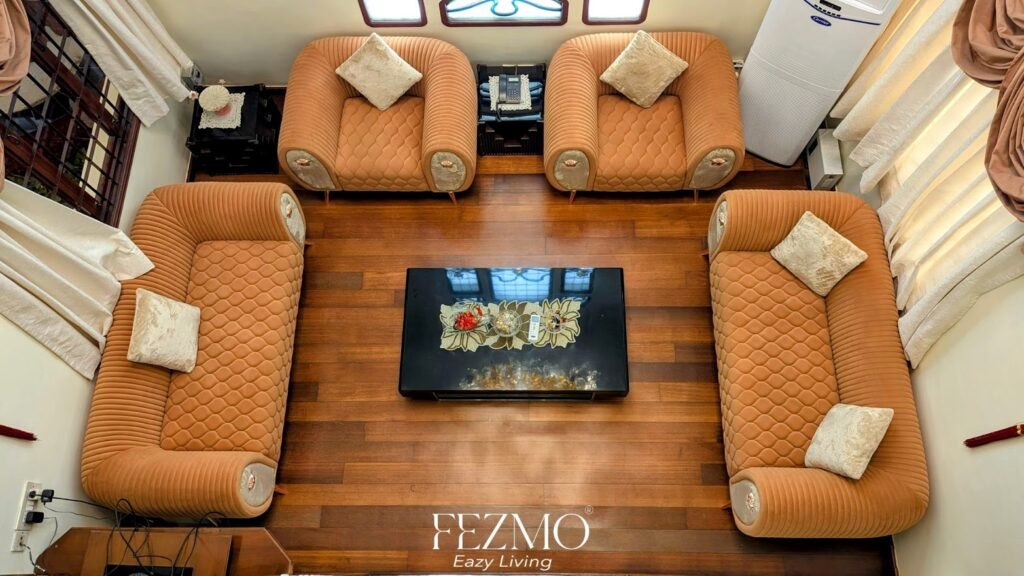
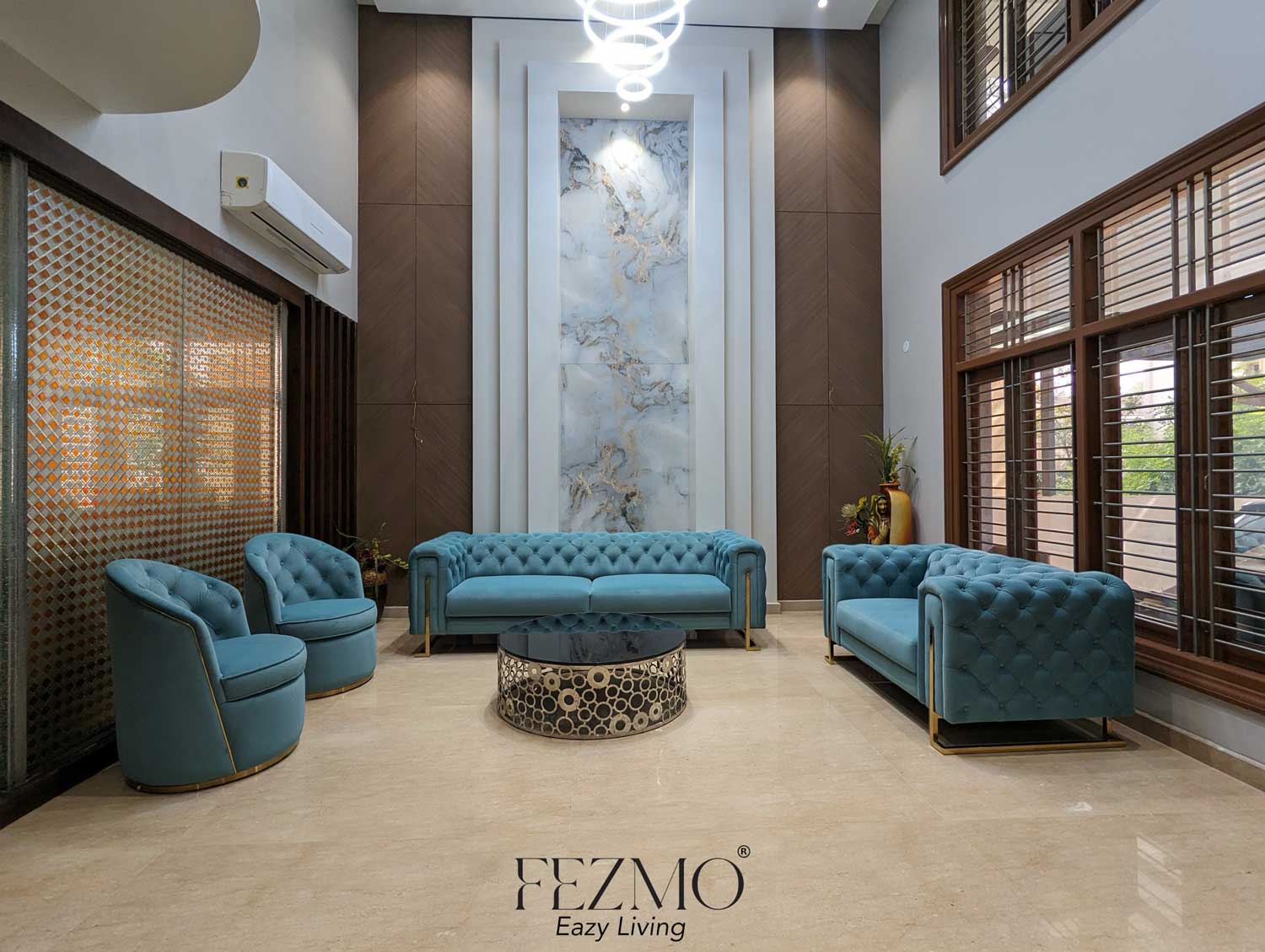
Explore the Chesterfield sofa collection as a working example of how Fezmo’s build standard translates into a piece designed to last for decades, not just for the photograph.
If you are ready to invest in furniture that will still look and feel excellent five years from now, visit a Fezmo showroom and ask to see the materials behind the products. No vague answers. No guesswork. Just furniture built properly. Book a consultation at fezmofurniture.com/contact-us/
Or browse the full range at fezmofurniture.com.
Conclusion
The difference between furniture that looks good and furniture that lasts is not always visible at the point of purchase. It lives in the foam density, the frame material, the fabric specification, and the construction method. It shows up in how the piece feels after two years of daily use, not how it photographs in a showroom.
Buying well means asking better questions, spending slightly more in the right places, and working with a furniture partner that treats material quality as a non-negotiable starting point rather than an optional upgrade. That is the standard your home deserves.
About the Author
This article was written by the Fezmo Editorial Team, a group of furniture enthusiasts, interior design consultants, and content specialists based in Chennai. With direct access to Fezmo’s design studio, manufacturing facility, and showroom teams, the Editorial Team writes content that bridges the gap between expert craftsmanship and everyday homeowning decisions. Every article is reviewed for accuracy and updated regularly to reflect the latest trends in the Chennai furniture market.